Culturerebuilt 1488

Janggyeong Panjeon, Haeinsa, Hapcheon

Early Joseon depositories that hold the Tripitaka Koreana woodblocks. Their scientific design for ventilation and humidity made them a World Heritage Site in 1995.
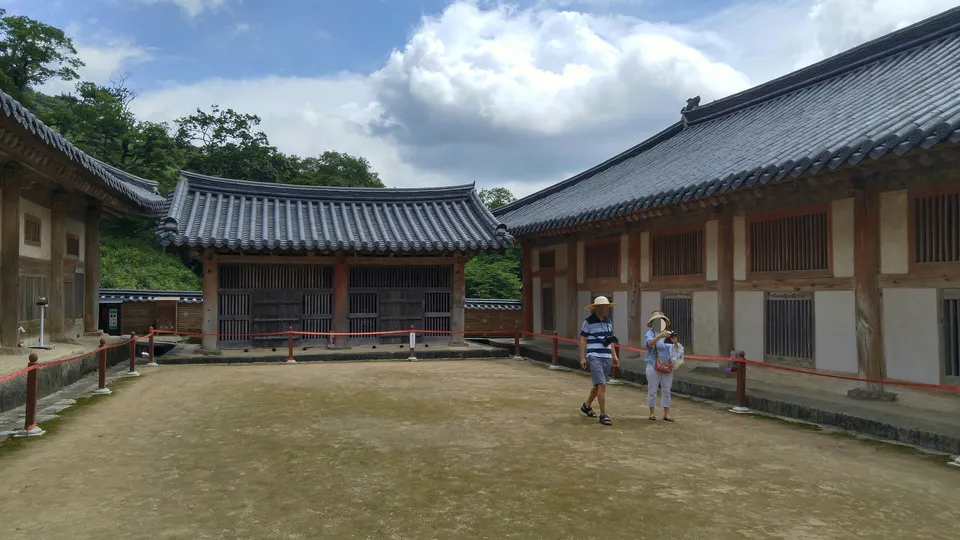
Janggyeong Panjeon, Haeinsa, Hapcheon — the depositories of the Tripitaka Koreana woodblocks

SpongeFan0304 · CC BY-SA 4.0 · Source

These buildings at Haeinsa house the Tripitaka Koreana woodblocks; what stands today was largely rebuilt in 1488 (19th year of King Seongjong). Two plain, unadorned halls, Sudarajang in front and Beopbojeon behind, stand side by side.

For airflow, the windows on the front and back walls differ in size top and bottom, and the earthen floor is packed with charcoal, lime and salt to absorb and release moisture. Thanks to this, more than 80,000 woodblocks have survived over 500 years without rotting or warping.

They are a National Treasure and became a UNESCO World Heritage Site in 1995; the woodblocks inside were inscribed on the Memory of the World Register in 2007.
The map in 1488

OpenFreeMap © OpenMapTiles © OpenStreetMap contributors

States and rulers at the time
Joseon — Seongjong
Places
Janggyeong Panjeon, Haeinsa

People

  • Seongjong1457 – 1495

    related figure · Ninth king of Joseon, who completed the Gyeongguk daejeon code and promoted Sarim scholars

Before and after

Themes that include this event

  • Changes in Architecture1200 – 1910

    From Geungnakjeon at Bongjeongsa to Seokjojeon at Deoksugung — Goryeo bracket styles, Joseon palaces, walls and multi-storey temple halls, and the Western buildings of the Korean Empire

  • Intangible and World Heritage2000 BC – 1850

    From the dolmens to Namhansanseong on the World Heritage List, from Jongmyo ritual music to ssireum on the Intangible Heritage lists — where each came from and when it was inscribed