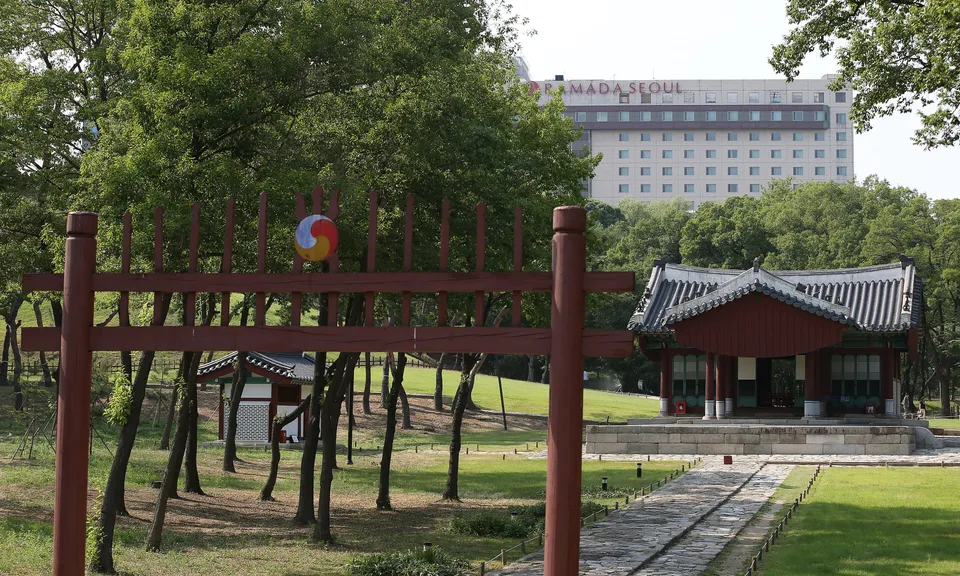
Seolleung, the tomb of King Seongjong, Gangnam-gu, Seoul

Republic of Korea · CC BY-SA 2.0 · Source

Person1457 – 1495

Seongjong

Ninth king of Joseon, who completed the Gyeongguk daejeon code and promoted Sarim scholars

Sejo's grandson, he took the throne at 13, with Queen Jeonghui acting as regent at first. He set up the Hongmungwan as successor to the Jiphyeonjeon, held frequent royal lectures and brought in sarim scholars such as Kim Jong-jik to check the hungu elite. The State Collection and Distribution system stopped officials from collecting taxes themselves. The Dongguk yeoji seungnam, Dongguk tonggam, Dongmunseon, Gukjo oryeui and Akhak gwebeom were compiled in his reign.

Where they went

OpenFreeMap © OpenMapTiles © OpenStreetMap contributors

6 related events

  1. 1

    Seongjong barred officials from collecting rent on their office land themselves; local governments collected it and passed it on to them.

  2. 2

    By order of King Seongjong, No Sa-sin, Seo Geo-jeong, Yang Seong-ji and others compiled the Dongguk yeoji seungnam, a geography recording the history, landscape, customs and notable people of every county.

  3. 3

    Under King Seongjong, Seo Geo-jeong and others published the Dongguk tonggam, a chronological general history from Gojoseon to the end of Goryeo.

  4. 4
    1485Joseon system of governmentrelated figure

    Joseon built a central government around the State Council and Six Ministries, checked by the Three Offices, and a local administration sending governors and magistrates to the eight provinces. It was codified in the Gyeongguk daejeon (1485).

  5. 5

    The national code begun under Sejo was completed and enforced under Seongjong, becoming the framework of Joseon government.

  6. 6

    Early Joseon depositories that hold the Tripitaka Koreana woodblocks. Their scientific design for ventilation and humidity made them a World Heritage Site in 1995.

Related works

Dramatized works (films, dramas, novels) may differ from the historical record.

People who appear alongside

  • Seo Geo-jeong1420 – 1488

    Scholar-official under Seongjong who led the compilation of the Dongguk tonggam, Dongguk yeoji seungnam and Dongmunseon

  • Sejo (Grand Prince Suyang)1417 – 1468

    Seized power in the 1453 coup and took the throne from his nephew Danjong

  • Taejong (Yi Bang-won)1367 – 1422

    Third king of Joseon, who seized power in the Strifes of Princes and strengthened royal authority

  • Sejong the Great1397 – 1450

    Fourth king of Joseon, creator of Hangul, patron of science and of the northern frontier

Themes this person appears in

  • Changes in the Land SystemAD 687 – 1950

    From nogeup to the end of office land — how the rights granted to officials shrank, and gave way to modern land ownership

  • Central Government Through the AgesAD 250 – 1899

    From the noble councils of the Three Kingdoms to the State Council, the Border Defense Council and the Gabo cabinet — how central government shifted between aristocratic consensus and royal power

  • Local Administration Through the AgesAD 250 – 1896

    From the five regions of the Three Kingdoms through nine provinces, the five circuits and two frontiers and the eight provinces to the thirteen — how directly the centre came to rule the regions

  • Writing Korean HistoryAD 375 – 1931

    From the Seogi, Guksa and Sinjip to the Joseon sanggosa — history-writing as royal display, Confucian record, assertion of independence and nationalist scholarship

  • Changes in Architecture1200 – 1910

    From Geungnakjeon at Bongjeongsa to Seokjojeon at Deoksugung — Goryeo bracket styles, Joseon palaces, walls and multi-storey temple halls, and the Western buildings of the Korean Empire

  • Intangible and World Heritage2000 BC – 1850

    From the dolmens to Namhansanseong on the World Heritage List, from Jongmyo ritual music to ssireum on the Intangible Heritage lists — where each came from and when it was inscribed

  • Ulleungdo and DokdoAD 512 – 1905

    From Isabu’s conquest of Usan-guk to Imperial Decree No. 41 — two East Sea islands recorded as Korean throughout
