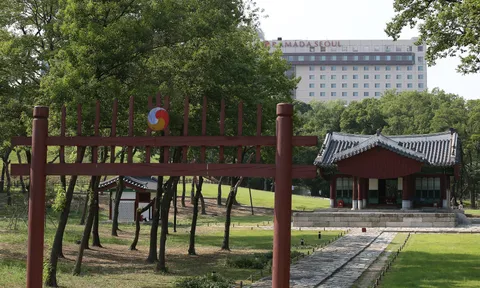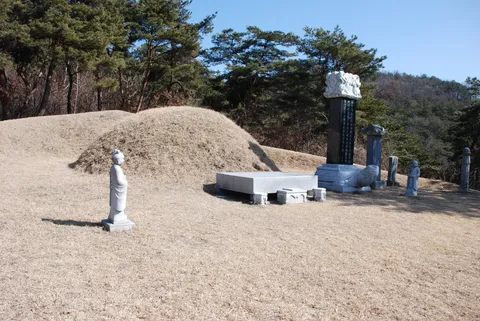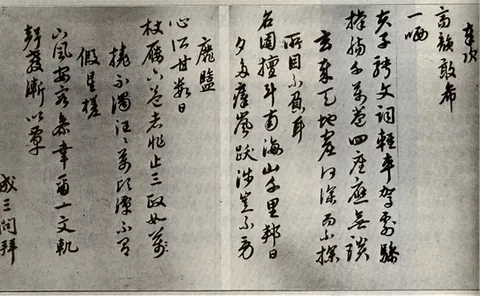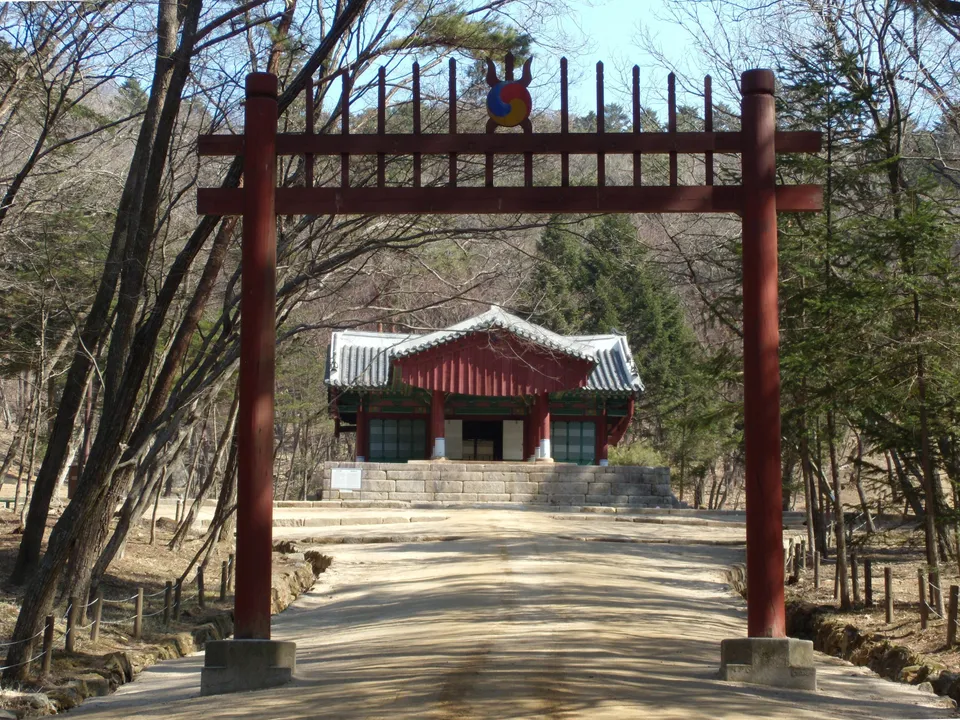
Gwangneung, the tomb of King Sejo, Namyangju

Shrhd25 (Korean Wikipedia) · Public domain · Source

Person1417 – 1468

Sejo (Grand Prince Suyang)

Seized power in the 1453 coup and took the throne from his nephew Danjong

Sejong's second son, he wrote the Seokbo sangjeol. After taking the throne from Danjong in 1455 he restored the direct reporting of the Six Ministries, and after the Six Martyred Ministers affair abolished the Jiphyeonjeon and halted the royal lectures (gyeongyeon). He introduced the Jikjeon Law, granting tax rights only to serving officials, and reorganised local defence under the jingwan system. After crushing Yi Si-ae's Rebellion he abolished the local yuhyangso councils. He began compiling the Gyeongguk daejeon, set up the Gangyeong dogam to translate Buddhist scriptures into Korean script and built Wongaksa temple.

Where they went

OpenFreeMap © OpenMapTiles © OpenStreetMap contributors

9 related events

  1. 1
    1453Gyeyu Coupleader

    Grand Prince Suyang killed Kim Jong-seo and Hwangbo In and took control; two years later he took the throne from his nephew Danjong.

  2. 2

    Seong Sam-mun, Bak Paeng-nyeon and others were executed for plotting to restore Danjong, who was exiled to Yeongwol and died the next year.

  3. 3

    King Sejo set up the jingwan system, grouping the troops of nearby counties under a key garrison town in each province for self-defence. The central army was reorganised into the Five Guards.

  4. 4

    The rite held at Jongmyo for the royal ancestors and the music, songs and dances that accompany it. Botaepyeong and Jeongdaeeop, composed under King Sejong, were adopted for the rite under King Sejo.

  5. 5
    1466Jikjeon Lawleader

    Sejo limited the grant of tax-collection rights to serving officials and abolished the grants to officials’ widows and orphans.

  6. 6

    The marble pagoda (1467) of Wongaksa, which King Sejo built in the heart of Hanyang. Modelled on Goryeo’s Gyeongcheonsa pagoda, it is a rare Buddhist monument from Confucian Joseon.

  7. 7

    When Sejo sent central officials to curb local magnates in Hamgil Province, Yi Si-ae of Gilju rebelled; the revolt was crushed within three months and the local yuhyangso bodies were abolished.

  8. 8
    1485Joseon system of governmentrelated figure

    Joseon built a central government around the State Council and Six Ministries, checked by the Three Offices, and a local administration sending governors and magistrates to the eight provinces. It was codified in the Gyeongguk daejeon (1485).

  9. 9
    1485Gyeongguk daejeon enactedrelated figure

    The national code begun under Sejo was completed and enforced under Seongjong, becoming the framework of Joseon government.

Related works

Dramatized works (films, dramas, novels) may differ from the historical record.

People who appear alongside

  • Danjong1441 – 1457

    Sixth king of Joseon, deposed by his uncle Sejo and killed in exile at Yeongwol

  • Sejong the Great1397 – 1450

    Fourth king of Joseon, creator of Hangul, patron of science and of the northern frontier

  • Seongjong1457 – 1495

    Ninth king of Joseon, who completed the Gyeongguk daejeon code and promoted Sarim scholars

  • Han Myeong-hoe1415 – 1487

    Strategist behind Grand Prince Suyang's 1453 coup

  • Kim Jong-seo1383 – 1453

    General and chief minister who built the Six Garrisons on the Tumen; killed by Grand Prince Suyang in 1453

  • Sin Suk-ju1417 – 1475

    Jiphyeonjeon scholar who helped create Hunminjeongeum, wrote the Haedong jegukgi after a mission to Japan, and became Chief State Councillor under Sejo

  • Seong Sam-mun1418 – 1456

    Hall of Worthies scholar executed for plotting to restore Danjong; one of the Six Martyred Ministers

  • Bak Paeng-nyeon1417 – 1456

    Jiphyeonjeon scholar executed as one of the Six Martyred Ministers for plotting with Seong Sam-mun to restore Danjong

Themes this person appears in

  • Changes in the Land SystemAD 687 – 1950

    From nogeup to the end of office land — how the rights granted to officials shrank, and gave way to modern land ownership

  • Central Government Through the AgesAD 250 – 1899

    From the noble councils of the Three Kingdoms to the State Council, the Border Defense Council and the Gabo cabinet — how central government shifted between aristocratic consensus and royal power

  • Local Administration Through the AgesAD 250 – 1896

    From the five regions of the Three Kingdoms through nine provinces, the five circuits and two frontiers and the eight provinces to the thirteen — how directly the centre came to rule the regions

  • Military Systems Through the AgesAD 685 – 1907

    From the Nine Oath Banners to the Two Armies and Six Guards, the Five Commands and garrison system, the Five Army Camps and the Board of Marshals — armies rebuilt at every crisis

  • Changes in PagodasAD 634 – 1467

    From Baekje stone pagodas copying timber ones and Silla pagodas copying brick ones, to Unified Silla three-story pagodas and stupas, Goryeo multi-sided pagodas and Yuan-influenced marble towers

  • Intangible and World Heritage2000 BC – 1850

    From the dolmens to Namhansanseong on the World Heritage List, from Jongmyo ritual music to ssireum on the Intangible Heritage lists — where each came from and when it was inscribed

  • Seoul18 BC – 1988

    From Hanseong Baekje to the June Democratic Struggle — the Han River land every kingdom fought for, and Joseon’s capital for five centuries