Conflict9th day of the 6th lunar month, 1882 (23 July)(Lunar)

Imo Incident

Old-style soldiers angry over unpaid wages rose up and attacked the Japanese legation. The Daewongun briefly returned to power until Qing troops seized him.
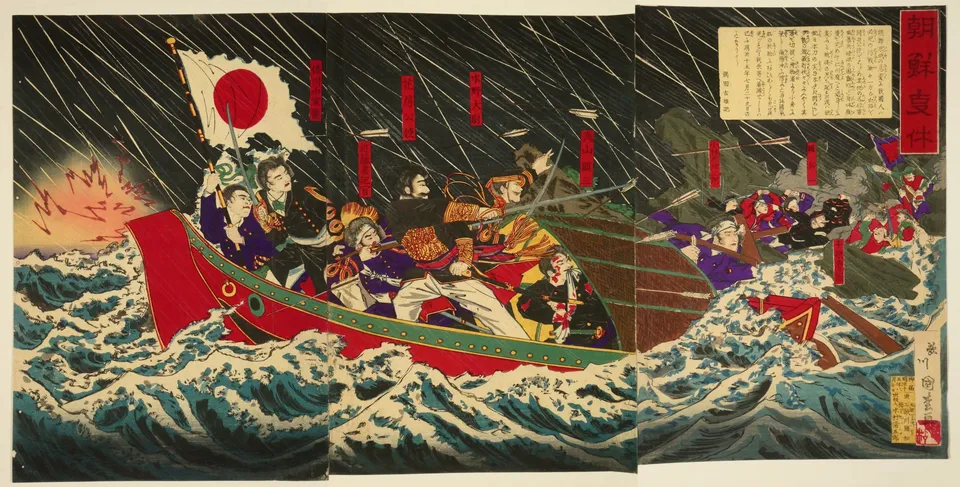
Flight of the Japanese legation from Seoul — print by Utagawa Kunimatsu, 1882

Utagawa Kunimatsu · Public domain · Source

While the new-style Special Skills Force was favoured, the old-style soldiers went unpaid for 13 months. When the rice they finally received was mixed with chaff and sand, they wrecked the house of Min Gyeom-ho, head of the Seonhyecheong, attacked the Japanese legation and killed the Japanese instructor of the new force. Joined by the urban poor they broke into the palace, and the queen fled to Janghowon in Chungju.

Gojong handed power to the Daewongun, who abolished the new reform office (Tongni gimu amun) and the Special Skills Force and restored the five old army commands. But Qing troops arrived, took the Daewongun away to Tianjin and restored the Min faction.

Qing troops then stayed in Seoul and advisers Ma Jianchang and Paul Georg von Möllendorff were sent to steer policy, while new trade regulations let Chinese merchants trade inland. With Japan, Joseon signed the Treaty of Jemulpo, paying an indemnity and allowing legation guards.
The map in 1882

OpenFreeMap © OpenMapTiles © OpenStreetMap contributors

States and rulers at the time
Joseon — Gojong
Qing · occupying force — Guangxu Emperor
Japan — Emperor Meiji

People

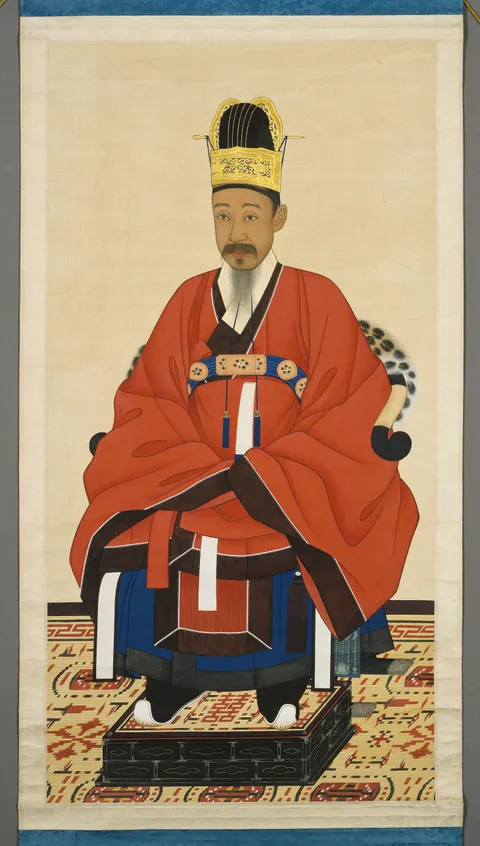
  • Heungseon Daewongun1820 – 1898

    related figure · Gojong's father and regent, who rebuilt Gyeongbokgung and rejected Western trade

  • Empress Myeongseong1851 – 1895

    related figure · Gojong's queen, who resisted Japanese influence and was assassinated in Gyeongbokgung

  • Gojong1852 – 1919

    monarch · Twenty-sixth king of Joseon and first emperor of the Korean Empire

Before and after

Themes that include this event

  • Military Systems Through the AgesAD 685 – 1907

    From the Nine Oath Banners to the Two Armies and Six Guards, the Five Commands and garrison system, the Five Army Camps and the Board of Marshals — armies rebuilt at every crisis

  • Seoul18 BC – 1988

    From Hanseong Baekje to the June Democratic Struggle — the Han River land every kingdom fought for, and Joseon’s capital for five centuries

  • ChungjuAD 450 – 1895

    From the Goguryeo stele to Tangeumdae — Jungwon, the middle of the Namhan River route that the Three Kingdoms fought over
