The Naming of America
In 1507 a world map published by the scholar Martin Waldseemüller at Saint-Dié in France first gave the new continent the name "America" — after Amerigo Vespucci, who had declared it a New World rather than Asia.
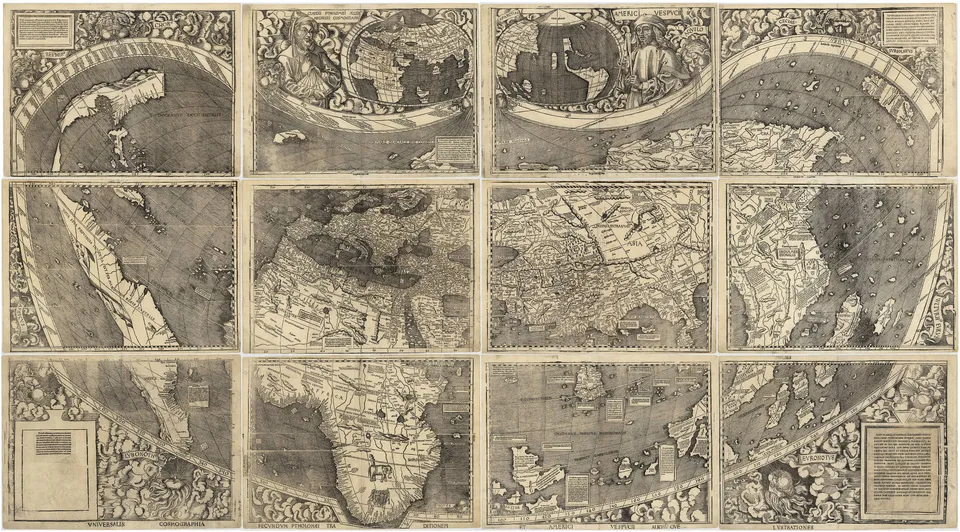
Martin Waldseemüller · Public domain · Source
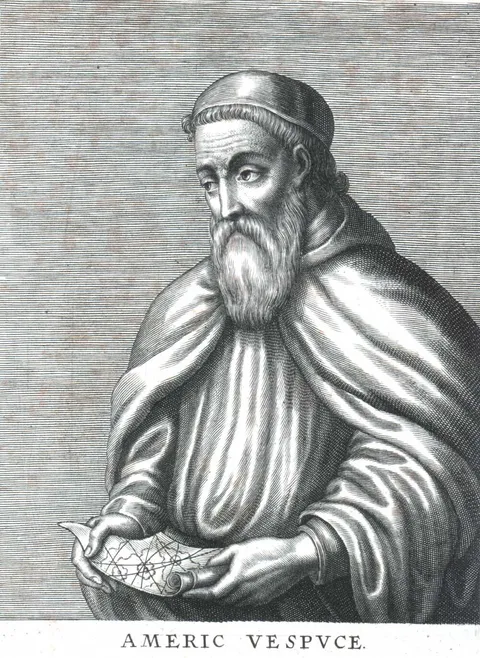
The Florentine Amerigo Vespucci sailed the coast of South America in 1499 and 1501–1502. A letter circulated under his name, Mundus Novus (1503), declared that land to be not the edge of Asia but a continent unknown to Europeans, and it was widely read.
In 1507 Martin Waldseemüller and his colleagues at Saint-Dié in Lorraine published a great twelve-sheet world map, the Universalis Cosmographia, writing "America" across South America — a Latin feminine form of Amerigo’s name. Waldseemüller later dropped the name from his maps, but it had already spread and came to cover North America too. The only surviving copy was bought by the US Library of Congress in 2003.