Nine Provinces and Five Secondary Capitals
King Sinmun divided the realm into nine provinces (ju) and set up five secondary capitals (sogyeong), completing the provincial system of unified Silla.
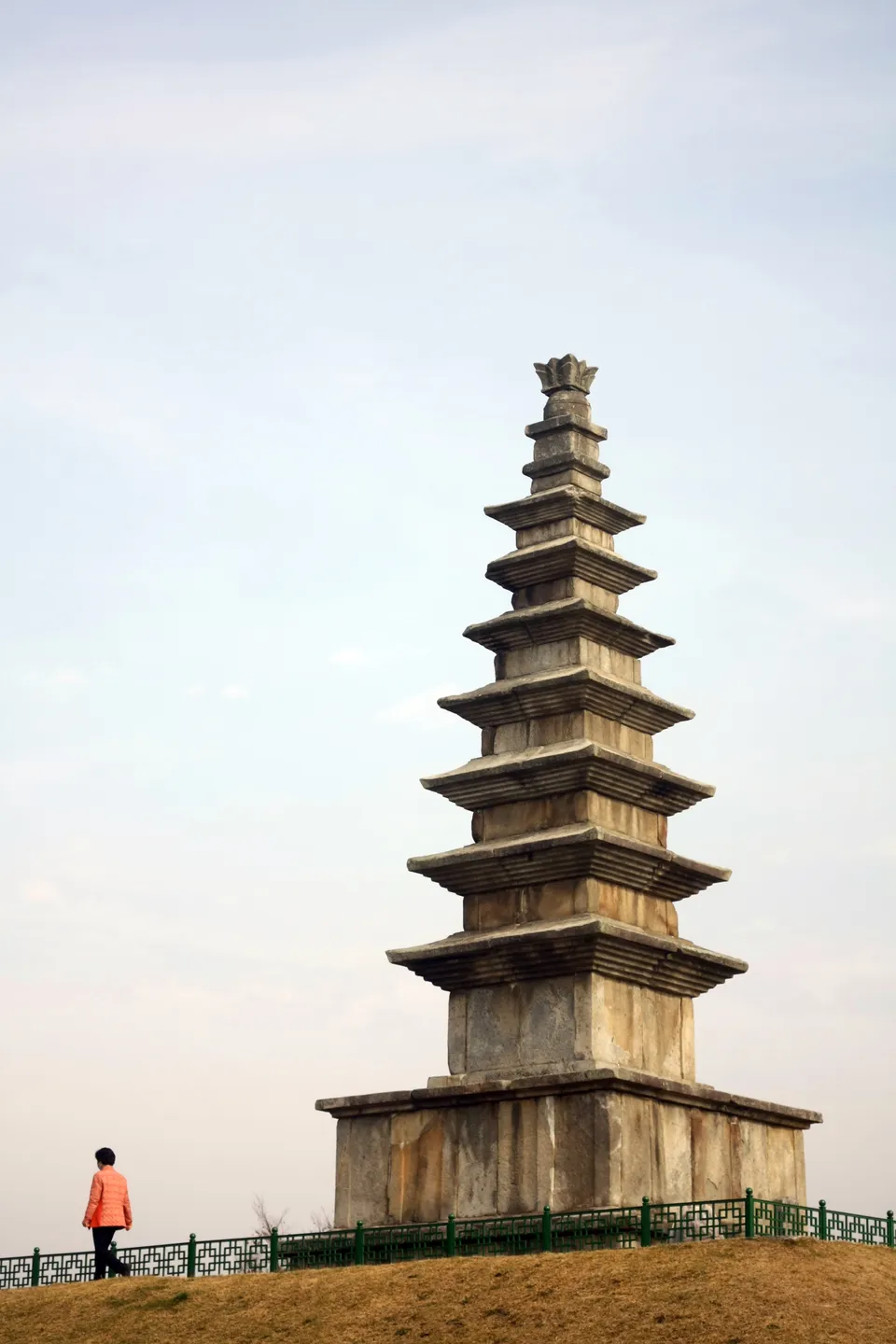
Dalgial · CC BY-SA 4.0 · Source
Three provinces lay in old Silla and Gaya (Sangju, Yangju, Gangju), three in old Baekje (Ungju, Jeonju, Muju) and three in old Goguryeo (Hanju, Sakju, Myeongju). Governors (dodok) ran the provinces and magistrates the counties below, inspected by oesajeong censors; under the sangsuri system local notables were kept in the capital as hostages.
The five secondary capitals — Gugwon, Bugwon, Seowon, Namwon and Geumgwan — offset the remoteness of Gyeongju in the southeast and housed resettled old aristocracies. The army was reorganized into the Nine Oath Banners (seodang) in the capital and Ten Garrisons (jeong) in the provinces; the banners enrolled Goguryeo, Baekje and Malgal people as well as Silla men.