First peoples of Australia
Also called: Peopling of Australia, Sahul
In the ice age Australia and New Guinea formed one continent, Sahul. People reached it from Southeast Asia by crossing the sea several times — by about 50,000 years ago at the latest — in what is counted among the oldest sea voyages.
With ice-age seas tens of metres lower, Sumatra, Java and Borneo were joined to mainland Asia as “Sunda”, and Australia, New Guinea and Tasmania formed a single continent, “Sahul”. Between them (eastern Indonesia today, across the Wallace Line) deep water remained, and people had to cross stretches of sea tens of kilometres wide, island by island.
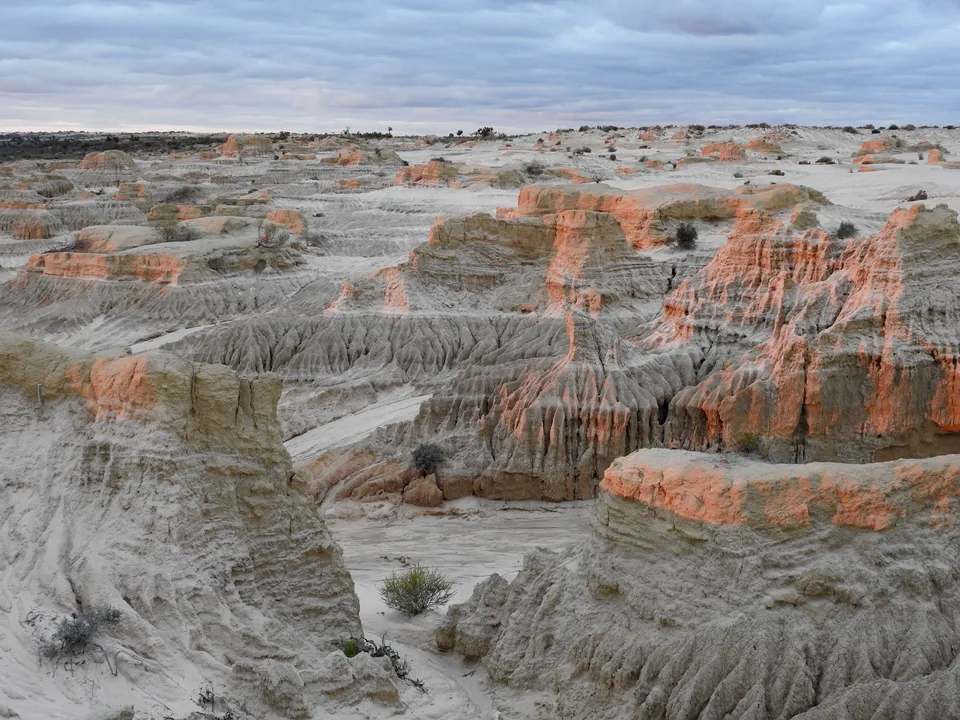
When they arrived is debated. A 2017 study dated the Madjedbebe rock shelter in Arnhem Land to 65,000 years ago, but many scholars, matching the period of mixing with Neanderthals (about 50,000–43,000 years ago), prefer about 50,000 years. At Lake Mungo in the south-east people were buried about 42,000 years ago.
Their descendants, Aboriginal Australians, have lived on the land for nearly 50,000 years since — one of the longest continuous cultures in the world.