Meeting the Neanderthals and Denisovans
Also called: Neanderthals, Denisovans, Neanderthal admixture
Modern humans who left Africa had children with Neanderthals in western Asia about 50,000 to 43,000 years ago, and mixed with Denisovans in Asia. Neanderthals contributed 1–2% of the genes of people outside Africa today.
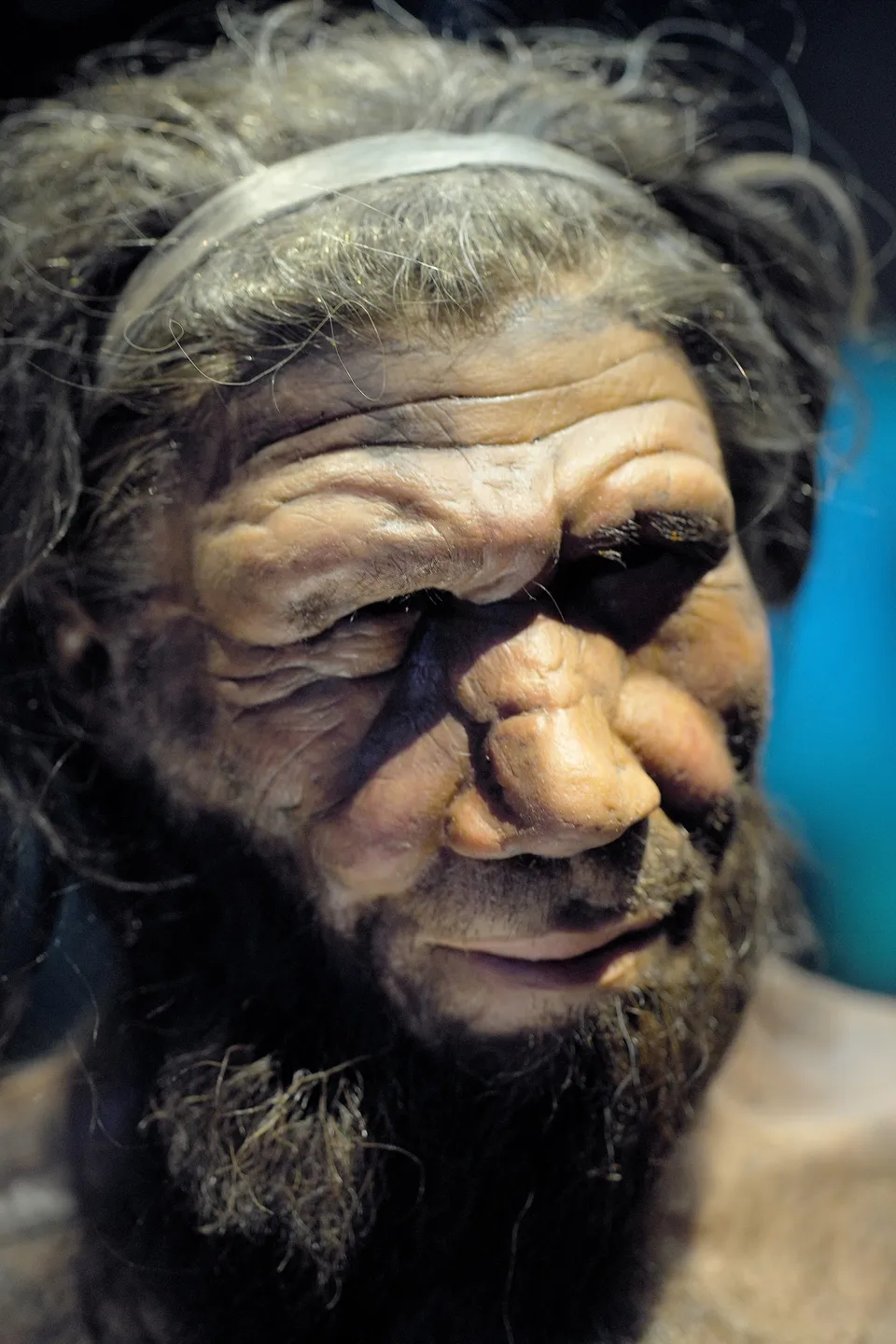
Werner Ustorf · CC BY-SA 2.0 · Source
Neanderthals were an archaic human group living in Europe and western Asia from about 400,000 years ago. They were stocky, had brains as large as ours, used fire and buried their dead. In 2010 Svante Pääbo’s team read the Neanderthal genome and showed that 1–2% of the genes of people outside Africa came from them.
Two studies in 2024, using dozens of ancient genomes, placed this mixing in a single period of roughly 7,000 years, about 50,000 to 43,000 years ago. Also in 2010, DNA from a single finger bone in Denisova Cave in the Siberian Altai revealed another archaic group, the Denisovans; their genes survive most strongly in people of Papua New Guinea and Aboriginal Australians.
Neanderthals disappeared about 40,000 years ago, and the Denisovans around the same time. Whether they were pushed out by modern humans, absorbed into them or undone by climate is still debated.