First peoples of the Americas
Also called: Peopling of the Americas, First Americans
People from Siberia crossed the ice-age Bering land bridge into the Americas, reaching Monte Verde in Chile by about 14,500 years ago. Footprints at White Sands, New Mexico, are dated to 23,000–21,000 years ago.
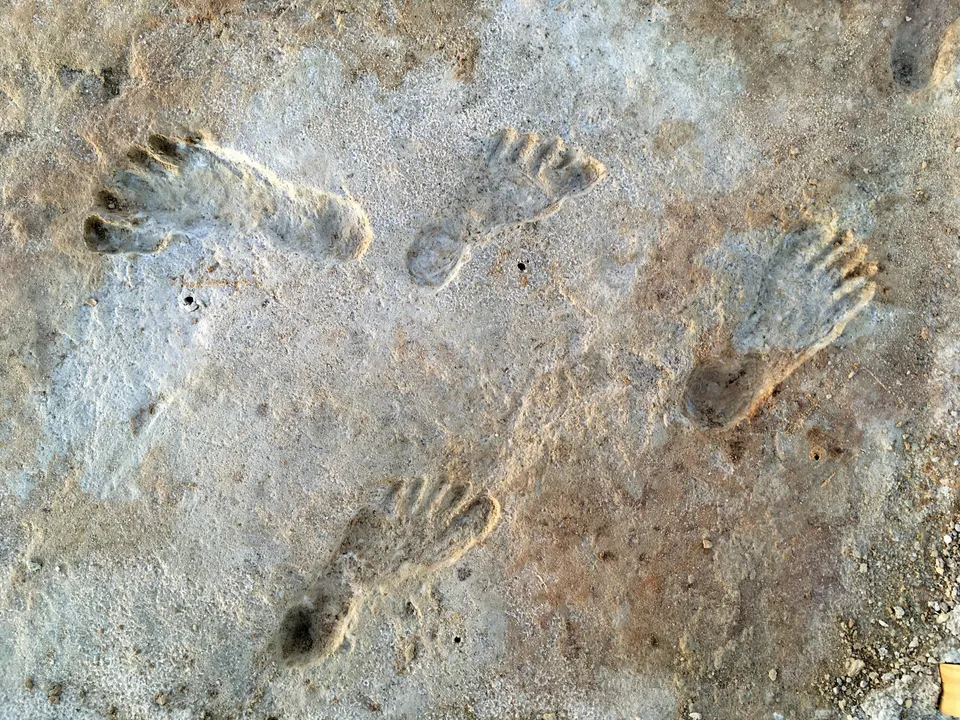
US Geological Service · Public domain · Source
The ancestors of Native Americans came from East Asia and Siberia. Their genes suggest they lived apart in Beringia for several thousand years during the last ice age before moving south.
With ice covering Canada, many scholars think the first people travelled south by boat along the Pacific coast; an ice-free corridor between the ice sheets opened only about 14,000 to 13,000 years ago. At Monte Verde in southern Chile huts about 14,500 years old survive.
When people first came is still debated. For a long time the Clovis culture, about 13,000 years ago, was thought the earliest, but footprints at White Sands, New Mexico, dated in 2021 and 2023 to 23,000–21,000 years ago, have strengthened the view that people were already there at the height of the ice age.