Modern humans in East Asia
Modern humans lived in northern China (Tianyuan Cave) about 40,000 years ago, and from about that time an Upper Palaeolithic culture of blades and tanged points spread across Korea and the Japanese islands.
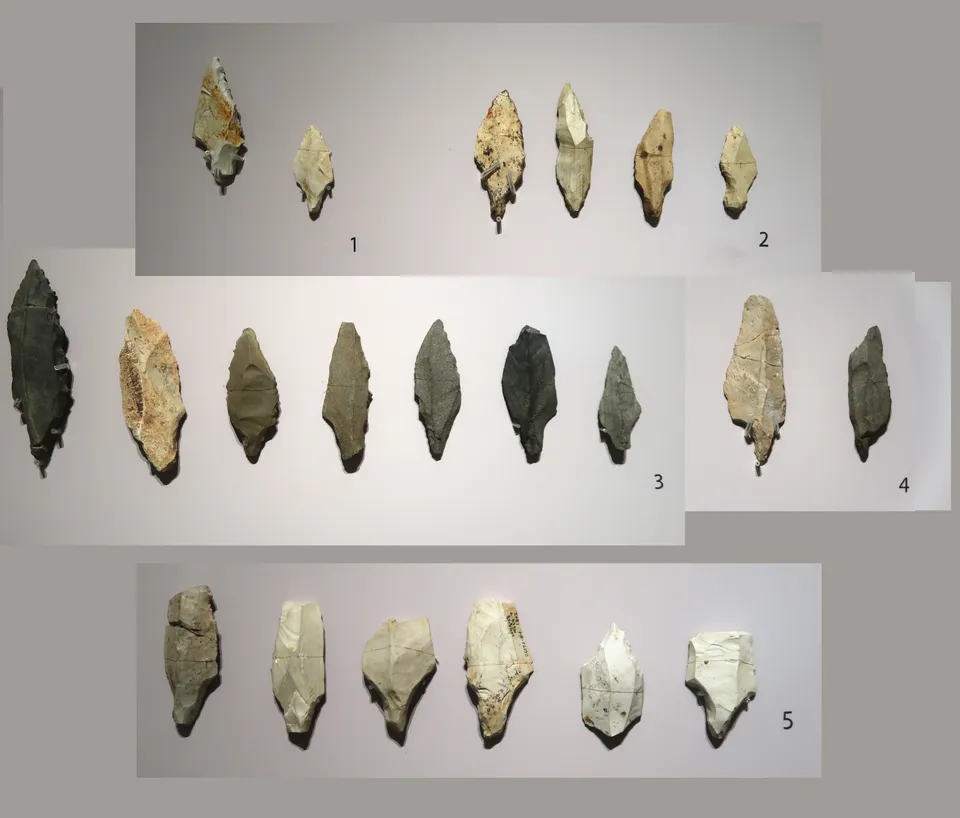
Ismoon ( talk ) 20:36, 8 June 2018 (UTC) · CC BY-SA 4.0 · Source
Bones about 40,000 years old from Tianyuan Cave, south-west of Beijing, are among the oldest modern humans in East Asia. Genetically this person belongs to the branch that leads to today’s East Asians and Native Americans.
Archaic humans had lived on the Korean Peninsula hundreds of thousands of years earlier, leaving stone tools such as the hand axes of Jeongok-ri. From about 40,000 years ago long blades and tanged points for hafting appear at sites such as Suyanggae in Danyang, taken as the trace of modern humans arriving. In Japan sites suddenly multiply from about 38,000 years ago — reached by boat, since the sea remained even in the ice age.