Discovery of Silver at Potosí
Also called: Cerro Rico
A mountain of silver, Potosí, was found in the Andean highlands of Spanish Peru. American silver flowed into Europe and Asia, binding the world economy together.
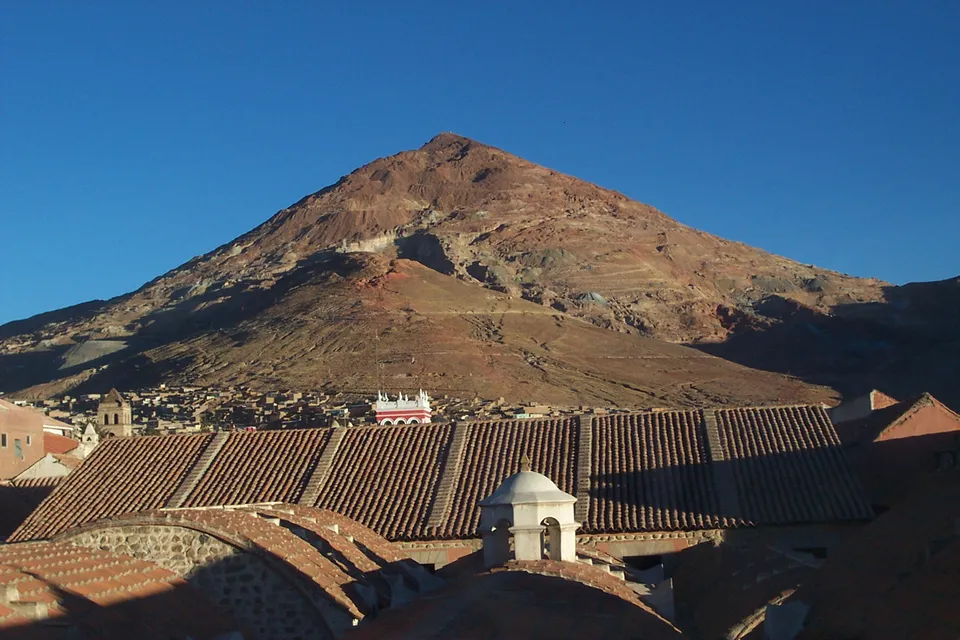
Mhwater (Dutch Wikipedia) · Public domain · Source
When silver was found in 1545 at the Cerro Rico ("rich mountain"), 4,000 metres up in southern Bolivia, Potosí soon became one of the largest cities in the Americas. From the 1570s mercury amalgamation and the mita — a forced-labour draft adapted from the Inca system — greatly increased output, and many Indigenous workers died in the shafts or of mercury poisoning. American silver passed through Spain and drove up European prices (the price revolution), and flowed via the Manila galleons into Ming China, underpinning the Single Whip tax reform paid in silver.