Rise of Commoner Culture
As commoners grew wealthier in late Joseon, pansori, mask dance, Hangul novels and narrative sijo flourished, along with the genre paintings of Kim Hong-do and Sin Yun-bok and anonymous folk painting.
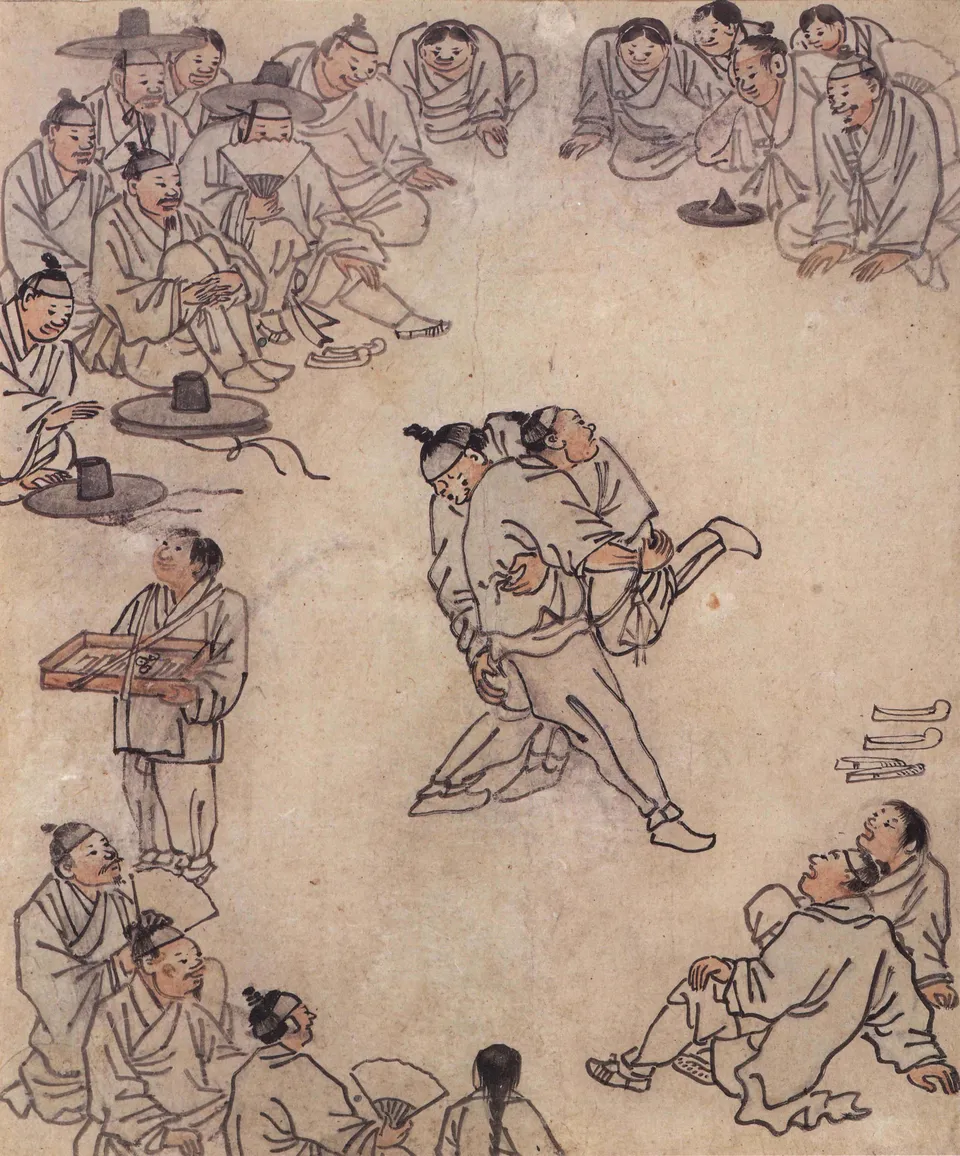
Kim Hong-do · Public domain · Source
Literature and performance: after Heo Gyun’s Tale of Hong Gil-dong, Hangul novels such as Chunhyang-jeon and Simcheong-jeon were widely read, rented from lending shops and recited by professional storytellers. Free-form narrative sijo voiced feelings frankly. In pansori a single singer narrates a story in song to a drummer’s beat; in the late nineteenth century Sin Jae-hyo set down six of the cycles. Mask dances and sandae plays mocked yangban hypocrisy and corrupt monks.
Painting: Kim Hong-do portrayed commoners at work and play — the village school, ssireum wrestling, dancing boys — with easy humour; Sin Yun-bok painted the pleasures of urban aristocrats and women in delicate line and bright colour. Anonymous folk paintings (minhwa) of magpies and tigers or ornamental characters decorated homes with commoners’ hopes.