Conflict28 September – 19 October 1781

Siege of Yorktown

Also called: Battle of Yorktown

While a French fleet sealed Chesapeake Bay, the American and French armies besieged Cornwallis at Yorktown; the surrender of some 8,000 British troops decided the war.
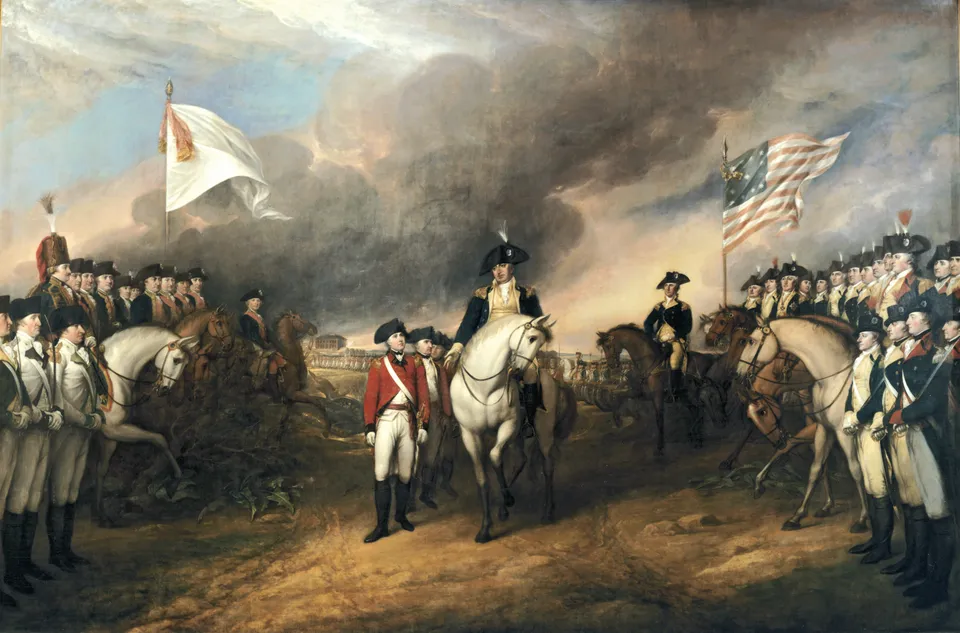
John Trumbull, “Surrender of Lord Cornwallis” (1820, US Capitol) — French troops at left, Americans at right

John Trumbull · Public domain · Source

After 1778 Britain turned to the South, where Loyalists were numerous, taking Savannah (1778) and Charleston (1780). Cornwallis swept through the Carolinas but was beaten at Kings Mountain and Cowpens, and in the summer of 1781 he dug in at Yorktown, Virginia, to be supplied by sea.

A French fleet under de Grasse came up from the West Indies and on 5 September drove off the British fleet at the mouth of Chesapeake Bay, closing the sea. Meanwhile the American and French armies of Washington and Rochambeau marched nearly 700 km south from around New York and closed around Yorktown. After bombardment and the storming of redoubts, Cornwallis’s army of about 8,000 surrendered on 19 October. Hearing the news, Prime Minister Lord North is said to have exclaimed, “It is all over.”
The map in 1781

OpenFreeMap © OpenMapTiles © OpenStreetMap contributors

States at the time
United States · victor
France · Central Powers
Great Britain · surrendered
Places
Yorktown

People

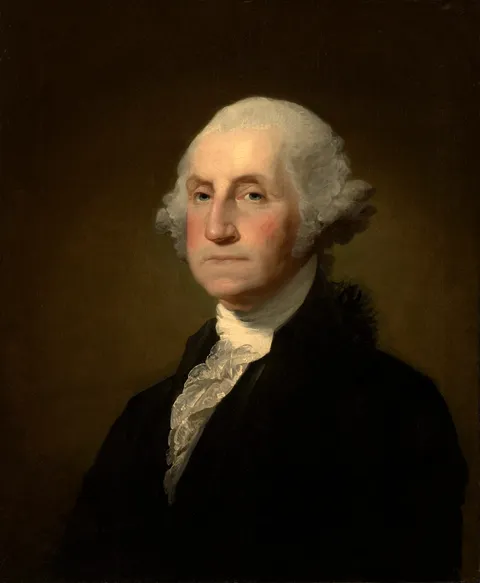
  • George Washington1732 – 1799

    commander · Commander of the Continental Army and first US president

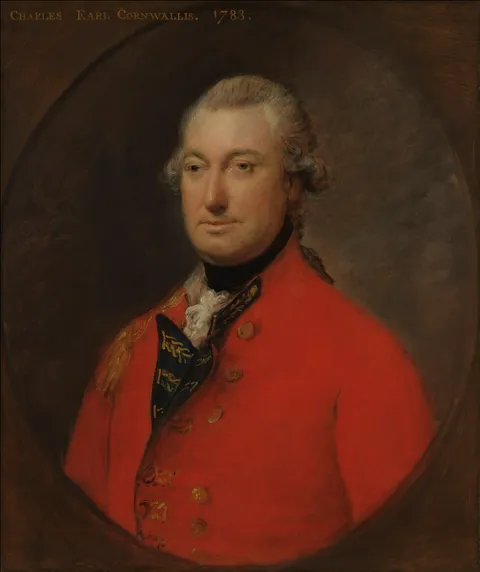
  • Charles Cornwallis1738 – 1805

    commander · British general who surrendered at Yorktown in 1781, later governor-general of India and lord lieutenant of Ireland

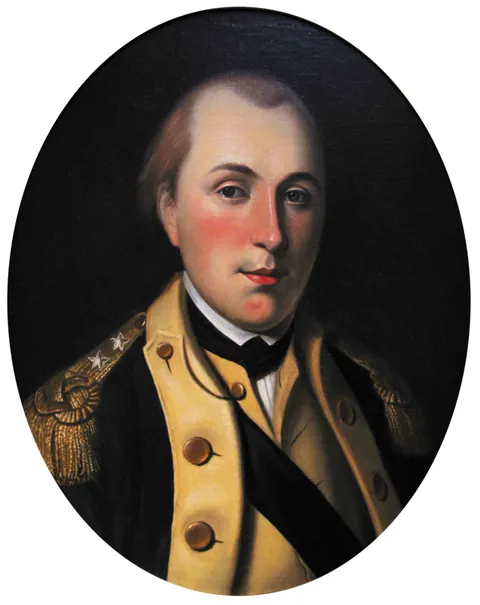
  • Marquis de Lafayette1757 – 1834

    commander · Nobleman and veteran of the American War of Independence who commanded the Paris National Guard and drafted the Declaration of the Rights of Man, and fled abroad in 1792, only to be held captive by the Austrians

Before and after

Themes that include this event

  • The American Revolution1765 – 1789

    From the Stamp Act to Washington’s inauguration — thirteen colonies that cried “No taxation without representation” fought Britain for eight years, won their independence and framed a new republic under the Constitution