Sinking of the Titanic
Also called: Titanic disaster, RMS Titanic
On the night of 14 April 1912 the British liner Titanic, on her maiden voyage, struck an iceberg in the North Atlantic and sank early the next morning. Of some 2,200 aboard, more than 1,500 died.
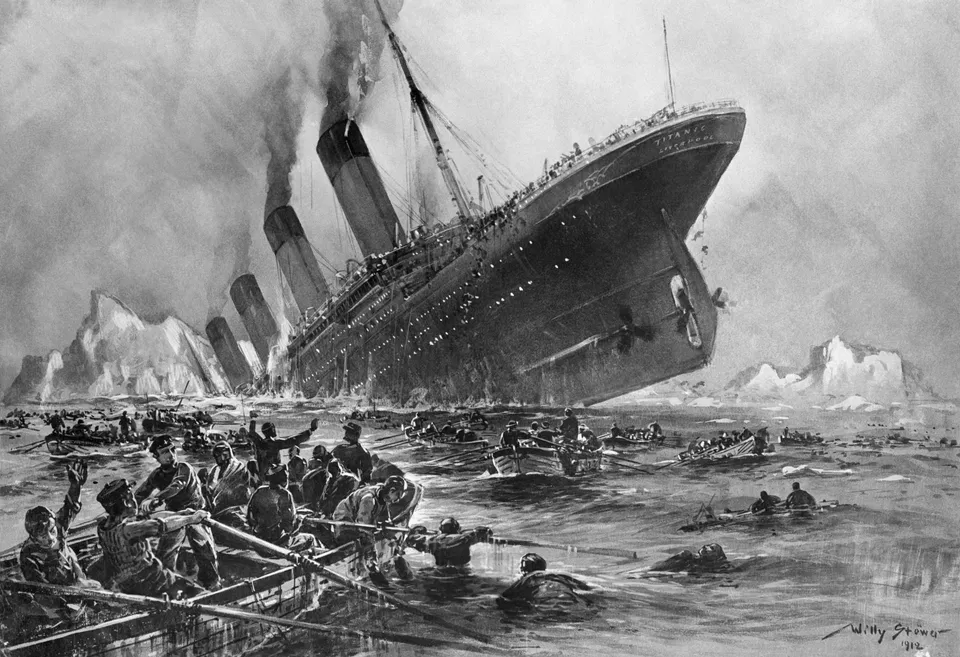
Willy Stöwer · Public domain · Source
The White Star Line’s Titanic was the largest ship in the world, called “unsinkable” for her watertight compartments. Leaving Southampton for New York on 10 April 1912, she received ice warnings from several ships on the 14th but hardly slowed.
At 11:40 p.m., south of Newfoundland, the lookout saw an iceberg dead ahead. The ship turned but scraped along it on her starboard side, opening the first five compartments to the sea — she had been built to survive four. Her twenty lifeboats could hold 1,178 people at most, and the first boats left half empty.
At 2:20 a.m. on the 15th she broke in two and sank. More than 1,500 people died in water of −2 °C. Carpathia, answering the distress call, picked up some 710 survivors from the boats from about 4 a.m. The disaster led to the International Convention for the Safety of Life at Sea (SOLAS), which required lifeboats for all, round-the-clock radio watch and an ice patrol in the North Atlantic.