Voyager 2 at Neptune
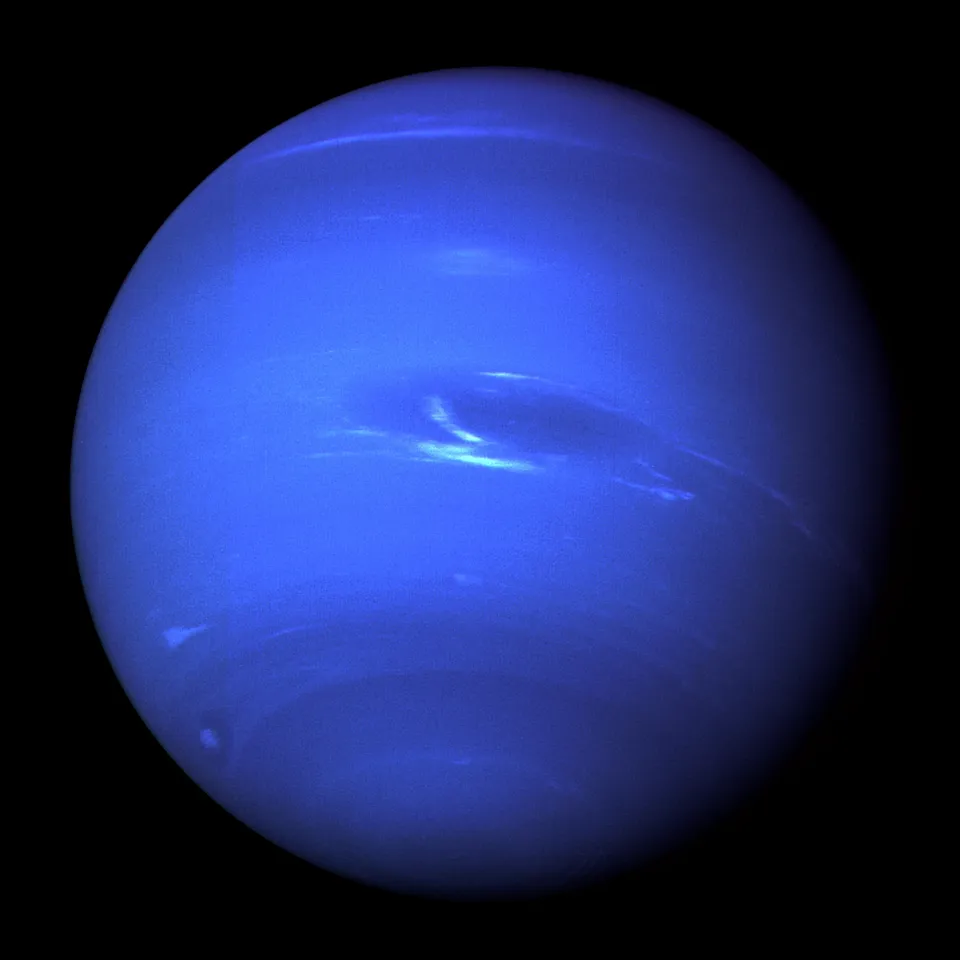
On 25 August 1989 Voyager 2 passed 5,000 km above Neptune’s north pole, the first close look at the last of the big planets. On its moon Triton it found geysers erupting from under the ice.
NASA · Public domain · Source
Twelve years after launch and 4.5 billion km from Earth, Voyager 2 passed 5,000 km above Neptune’s cloud tops on 25 August — the closest it came to anything on its whole journey. News from there took four hours at the speed of light to reach Earth.
Neptune was deep blue, with an Earth-sized dark storm (the Great Dark Spot) and the fastest winds in the solar system. Its largest moon Triton, passed five hours later, was at −235 °C one of the coldest places in the solar system — yet dark plumes rose 8 km from beneath its ice. Triton’s gravity bent Voyager 2 south, below the plane of the planets, onto a path that would never meet another planet.