Person210 BC
Meng Tian
Qin general who drove the Xiongnu out of the Ordos with an army of 300,000 and joined up the frontier walls; after the Shaqiu plot he was forced to take his own life by a forged edict
Qin general who drove the Xiongnu out of the Ordos with an army of 300,000 and joined up the frontier walls; after the Shaqiu plot he was forced to take his own life by a forged edict
The First Emperor gave General Meng Tian 300,000 men to drive the Xiongnu north and join the old walls of Qin, Zhao and Yan into a wall stretching from Lintao to Liaodong. Most of the Great Wall standing today was rebuilt much later by the Ming.
When the First Emperor died at Shaqiu on his fifth tour in 210 BCE, the eunuch Zhao Gao and Chancellor Li Si hid his death and forged his will, forcing his eldest son Fusu to kill himself and placing the youngest son Huhai on the throne as Second Emperor.
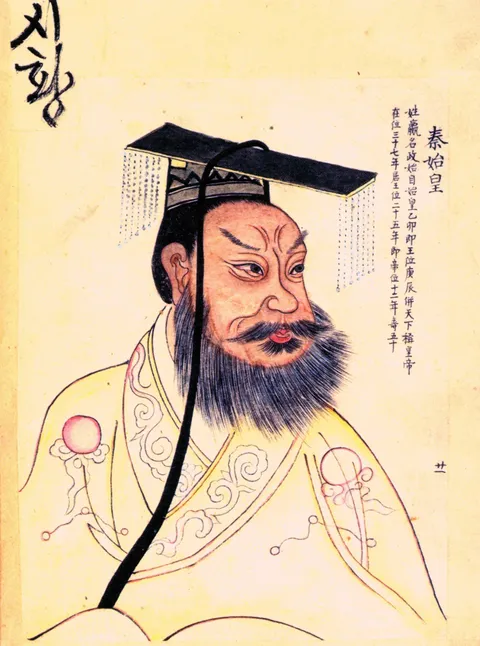
King of Qin (247–221 BCE) and first emperor (221–210 BCE) who conquered the six other states, unified China and created a centralised imperial system
Qin eunuch who placed Huhai on the throne as Second Emperor in the Shaqiu plot and seized power after bringing down Li Si; remembered for “calling a deer a horse”
Chancellor of Qin; a Legalist who helped the First Emperor unify China, create the commanderies and standardise the script, and proposed the burning of the books. After the emperor’s death he joined Zhao Gao in forging the will, but was executed on Zhao Gao’s slander
From the Hundred Schools of the Warring States to the unified empires of Qin and Han, and from the Buddha to the Maurya and Kushan empires — the millennium that shaped East and South Asian civilisation