History of Korean Currency
From Geonwon Jungbo to the 1905 currency reform — how coins took hold in an economy of rice and cloth, and how monetary sovereignty was lost
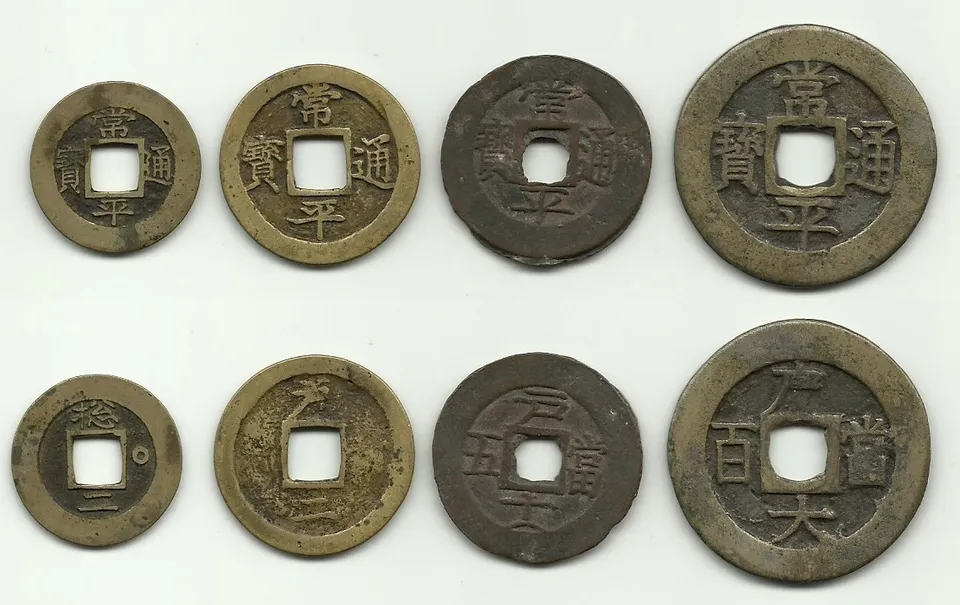
Donald Trung Quoc Don · CC BY-SA 4.0 · Source

From Geonwon Jungbo to the 1905 currency reform — how coins took hold in an economy of rice and cloth, and how monetary sovereignty was lost

Donald Trung Quoc Don · CC BY-SA 4.0 · Source

| Currency | When · ruler | Features | Outcome |
|---|---|---|---|
| Geonwon Jungbo | Goryeo, Seongjong 996 | First iron coin; "Dongguk" on back | Little used |
| Silver vase · Haedong Tongbo | Sukjong 1101 · 1102 | Mint (Uicheon); vase shaped like Korea | Elites only; people kept barter |
| Jeohwa | Joseon, Taejong 1401 | Mulberry paper money; Saseomseo | Lost out to rice and cloth |
| Joseon Tongbo | Sejong 1423 | Copper coin alongside paper money | Little used |
| Sangpyeong Tongbo | Injo 1633 → legal tender 1678 | Nationwide; taxes and rents in coin | Coin shortage; calls to abolish |
| Dangbaekjeon | Heungseon Daewongun 1866 | Face value 100 times the coin | Inflation; stopped next year |
| Mint — dangojeon, nickel coins | 1883 – 1904 | Dangojeon (1883); excess nickel coins | Currency debased |
| Currency reform | 1905, Megata | Nickel coins → Daiichi Bank notes, graded | Korean merchants ruined; finance subordinated |
Under Seongjong, Goryeo cast the iron Geonwon Jungbo, the first metal currency issued by a Korean state.
At Uicheon’s urging, King Sukjong set up a mint that issued silver vases (hwalgu) and coins such as Haedong tongbo, but in a largely self-sufficient economy they did not circulate widely.
Taejong set up the Saseomseo office and issued jeohwa, paper money made from mulberry bark.
Sejong had the Joseon Tongbo copper coin made to circulate alongside paper money, but it lost out to rice and cloth.
On the advice of Heo Jeok and others, Sukjong made the Sangpyeong tongbo the legal coinage and had it minted widely; by the late 18th century it circulated nationwide.
To pay for rebuilding Gyeongbokgung, the Heungseon Daewongun issued the dangbaekjeon, a coin rated at 100 times the Sangpyeong Tongbo, setting off steep inflation.
The Joseon government set up the Jeonhwanguk mint and issued the dangojeon coin. The nickel coins later minted there in excess became the pretext for the 1905 currency reform.
The Japanese financial adviser Megata had the Korean Empire’s nickel coins and copper cash exchanged for notes of Japan’s Dai-Ichi Bank. Korean merchants and banks were badly hurt and Korea’s finances were tied to Japan.

Sixth king of Goryeo, who adopted Choe Seung-ro’s 28-article memorial and built a Confucian central and local administration
Fifteenth king of Goryeo, who minted coins such as Haedong tongbo and created the Byeolmuban army
Royal monk, son of Munjong, who studied in Song, compiled the Gyojang and founded the Cheontae school in Goryeo

Third king of Joseon, who seized power in the Strifes of Princes and strengthened royal authority

Fourth king of Joseon, creator of Hangul, patron of science and of the northern frontier

Southerner chief state councillor who had the Sangpyeong tongbo coin minted for general use; ousted and executed in the 1680 change of power

Gojong's father and regent, who rebuilt Gyeongbokgung and rejected Western trade

Radical reformer who led the 1884 coup, fled to Japan and was assassinated in Shanghai
Japanese official made financial adviser to the Korean Empire by the first Japan–Korea Agreement; carried out the 1905 currency reorganization