Modern humans in Europe
Also called: Cro-Magnons, Early European modern humans
Modern humans entered Europe about 45,000 years ago and lived alongside Neanderthals for several thousand years. About 36,000 years ago they painted animals in Chauvet Cave in France.
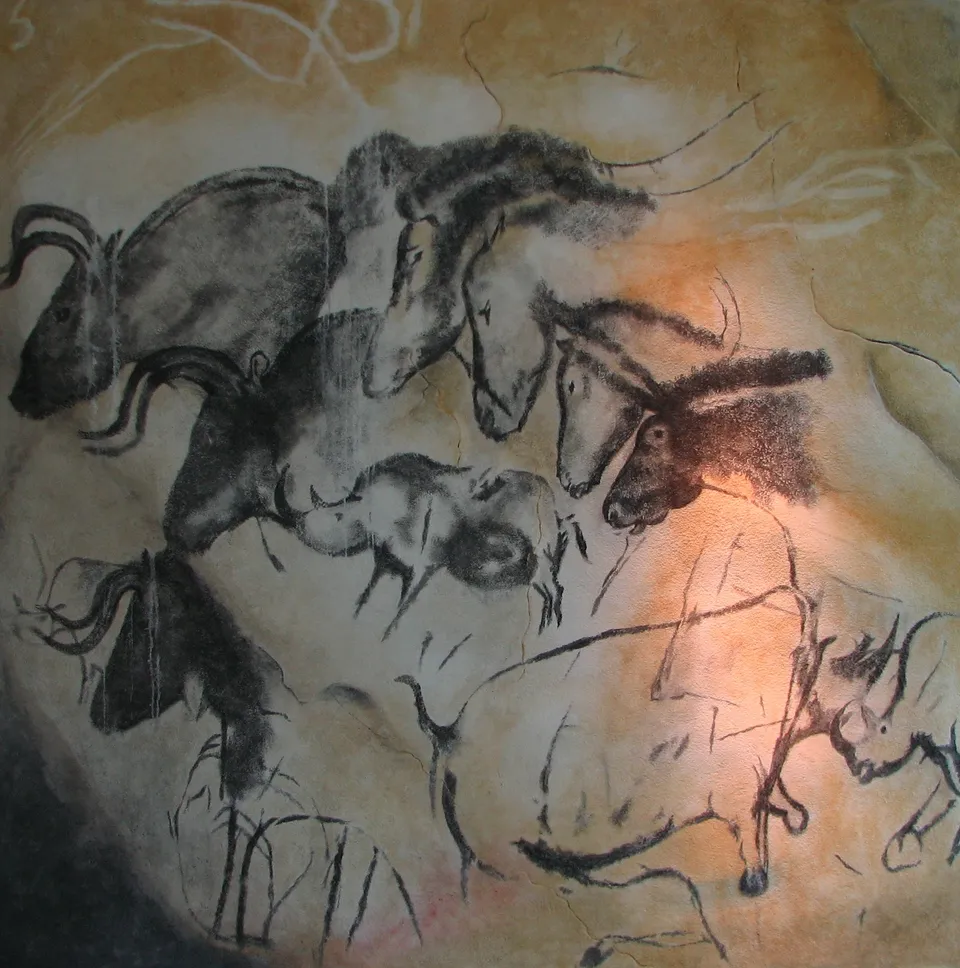
HTO · Public domain · Source
Human bones about 45,000 years old from Bacho Kiro Cave in Bulgaria are the oldest directly dated modern humans in Europe; their genomes show Neanderthal ancestors only a few generations back.
Within a few thousand years modern humans spread across Europe, and Neanderthals disappeared about 40,000 years ago. The Upper Palaeolithic people who followed made needles, harpoons and flutes of bone and ivory and left paintings deep inside caves. Chauvet Cave in southern France, found in 1994, holds horses, lions, rhinoceroses and mammoths painted about 36,000 years ago.