Liberation of Korea
Also called: National Liberation Day of Korea
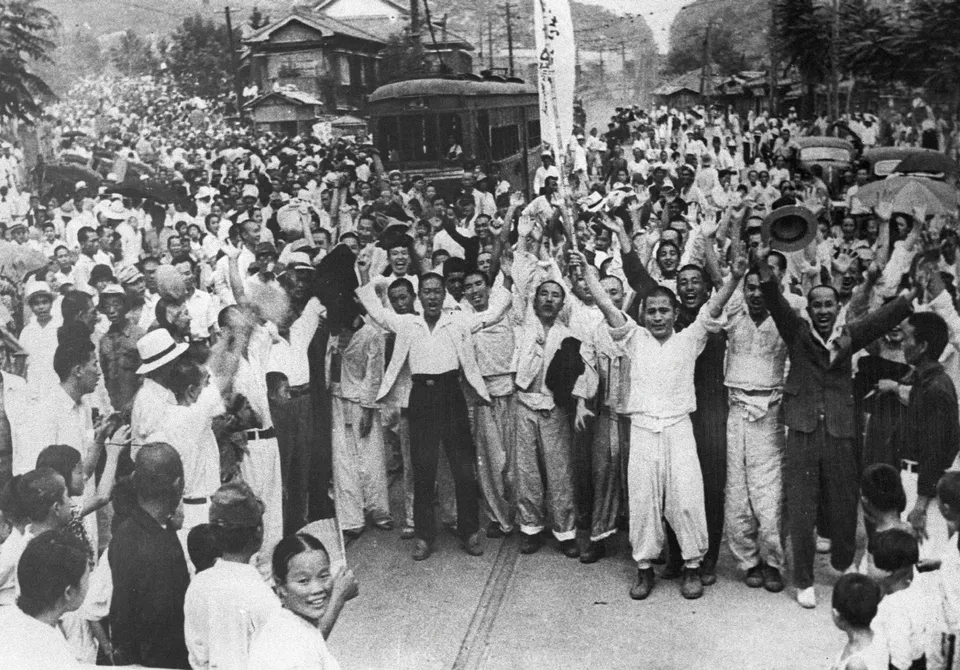
On 15 August 1945 Japan's surrender ended its rule over Korea. US and Soviet troops moved in on either side of the 38th parallel.
Unknown author · Public domain · Source
Liberation came with the Allied victory and as the fruit of a long independence struggle at home and abroad. At Cairo in 1943 the Allies first promised Korean independence "in due course", and the Potsdam Declaration of July 1945 confirmed it. In China the Korean Liberation Army was preparing an advance into the homeland with the US Office of Strategic Services, and at home Lyuh Woon-hyung formed the Korea Founding League to prepare for liberation.
After the United States dropped atomic bombs on Hiroshima and Nagasaki and the Soviet Union entered the war, Japan announced its unconditional surrender on 15 August, before the Liberation Army’s advance could take place. That same day Lyuh formed the Committee for the Preparation of Korean Independence.
As Soviet troops had already entered the north, the United States proposed dividing the occupation at the 38th parallel. US troops entering Seoul in September set up a military government, while the Soviets in the north ruled indirectly through people’s committees. This division was the beginning of the split of Korea.