March First Movement
Also called: Samil Movement
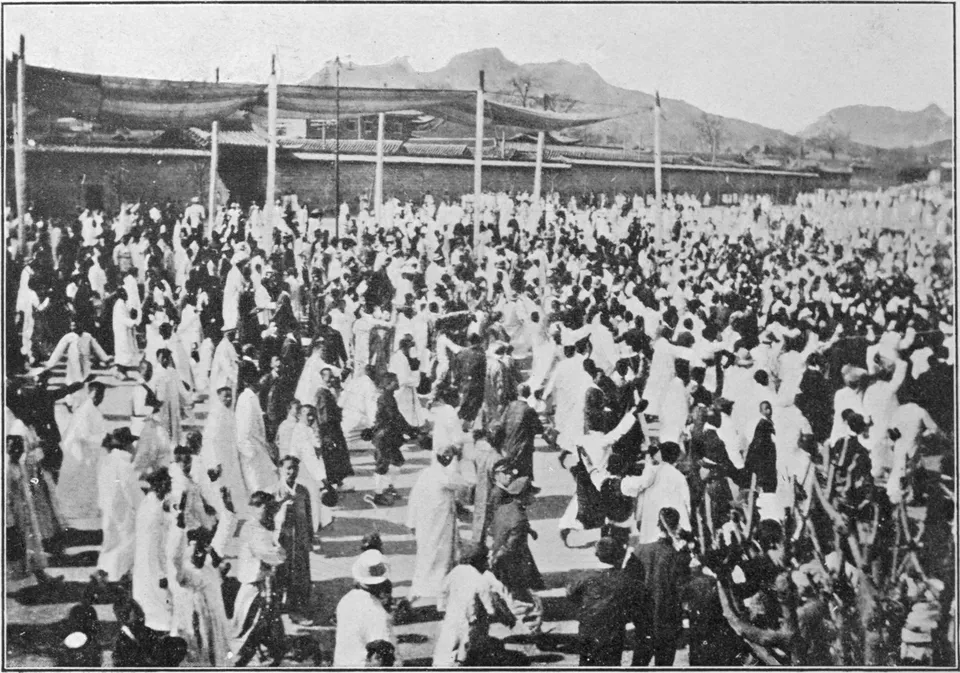
Beginning on 1 March 1919 with the reading of a declaration of independence, demonstrations spread across the country. It led to the founding of the Provisional Government of the Republic of Korea.
Bureau d'information coréen · Public domain · Source
Near the end of the First World War, US President Wilson proclaimed national self-determination and Russia’s revolutionary government promised to support the liberation of small nations. At home, resentment of military rule and the land survey ran deep, and the sudden death of the former emperor Gojong in January 1919 spread rumours of poisoning. Abroad, the New Korea Youth Party sent Kim Kyu-sik to the Paris Peace Conference, and Korean students in Tokyo issued the February Eighth Declaration of Independence.
Beginning on 1 March with the declaration by the 33 national representatives and the demonstration in Tapgol Park, the movement spread for more than two months across the country and to Manchuria, the Maritime Province and America. Japan put it down by force with troops and military police; the Aunae market protest led by Yu Gwan-sun and the Jeamni massacre belong to this time.
The movement showed the need for a leadership to direct the struggle, leading to the founding of the Provisional Government of the Republic of Korea, and it forced Japan to switch to so-called cultural rule. Afterward the national movement branched out into armed struggle, self-strengthening movements and socialism.