Drafting of the US Constitution
Also called: Constitutional Convention, United States Constitution
The Constitutional Convention at Philadelphia drafted the US Constitution, creating a federal government with separated powers — the oldest written national constitution still in use.
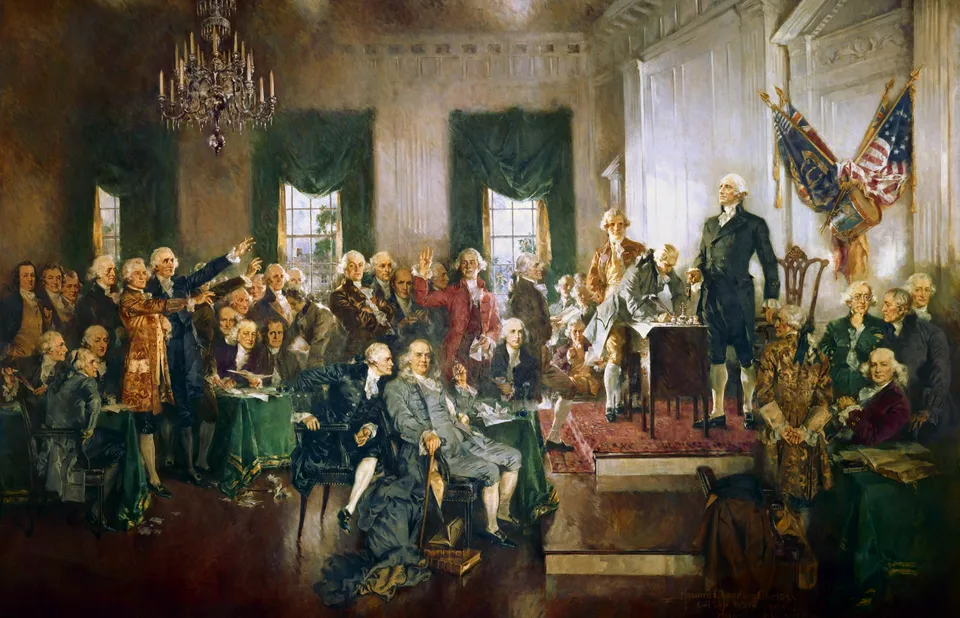
Howard Chandler Christy · Public domain · Source
The Articles of Confederation adopted after independence gave the central government no power to tax or to keep an army. After Shays’ Rebellion (1786–87), a rising of Massachusetts farmers crushed by debts and taxes, 55 delegates from twelve states met at Philadelphia in May 1787. Washington presided, and James Madison laid out the framework of the draft.
Large and small states compromised on a House apportioned by population and a Senate with two members for every state. At the South’s insistence, enslaved people were counted as three-fifths of a person, and the slave trade was protected until 1808. Signed on 17 September, the Constitution divided legislative, executive and judicial power so that each checked the others, and it took effect when the ninth state ratified in June 1788. In 1791 the Bill of Rights added freedoms of speech and religion.