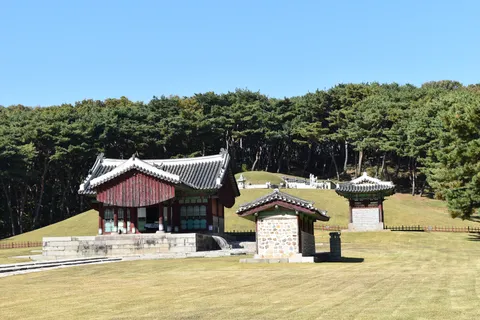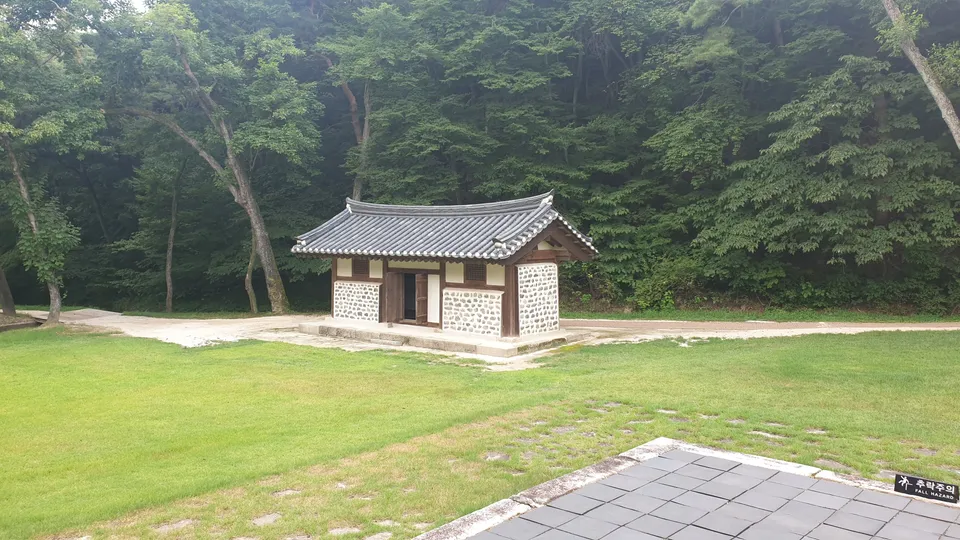
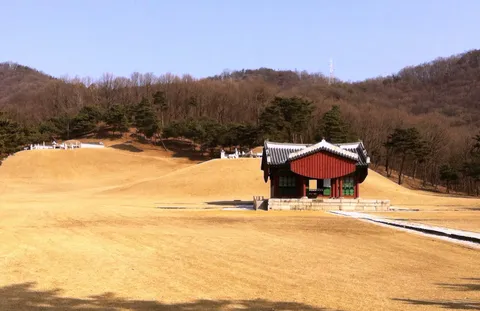
Yeongneung, the tomb of King Hyojong, Yeoju

Altostratus · CC BY-SA 4.0 · Source

Person1619 – 1659

Hyojong

Seventeenth king of Joseon; a former hostage in Qing who planned a northern campaign and sent troops against Russia

As Grand Prince Bongnim he was taken hostage to Shenyang with his elder brother Crown Prince Sohyeon after the Second Manchu Invasion. As king he employed Westerners such as Song Si-yeol and enlarged the Eoyeongcheong to prepare a northern expedition against the Qing, but it never came. Instead, at the Qing's request, he sent musketeers against the Russians in 1654 and 1658 (the Naseon expeditions). In 1653 Hamel was shipwrecked on Jeju and the Shixian calendar was adopted.
Where they went

OpenFreeMap © OpenMapTiles © OpenStreetMap contributors

5 related events

  1. 1

    Hyojong, once a hostage in Qing, expanded the Eoyeongcheong army and recruited Song Si-yeol and others to prepare a campaign against the Qing; the plan died with him.

  2. 2

    On Kim Yuk’s advice Joseon adopted the Shixian calendar, made in Qing on the basis of Western astronomy.

  3. 3
    1653 – 1666Hamel’s shipwreckmonarch

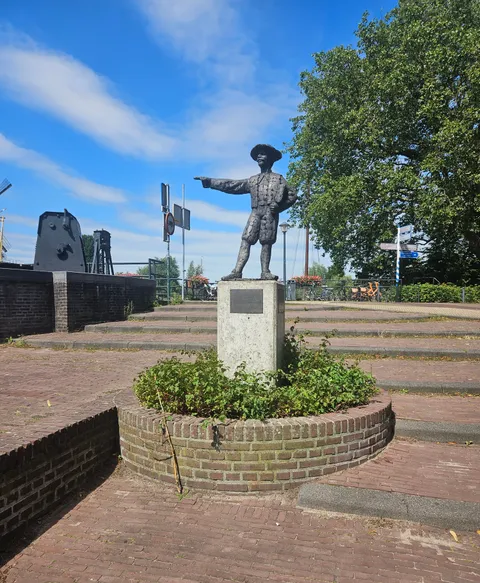
    The Dutch ship Sperwer was wrecked on Jeju. Hendrick Hamel and his crew spent 13 years in Joseon before escaping, and his account introduced Korea to Europe.

  4. 4
    1654 – 1658Expeditions against Russiamonarch

    At Qing’s request, Joseon musketeers twice marched to the Amur region and defeated Russian forces moving south.

  5. 5
    1682Five Army Camps completedrelated figure

    King Sukjong set up the Geumwiyeong, completing the system of Five Army Camps together with the Hullyeon Dogam, Eoyeongcheong, Chongyungcheong and Sueocheong.

Related works

  • Documentary: History Special Episode 17: The Northern Expedition Plan and the Fate of JoseonDocumentary · 2009 · KBS1

People who appear alongside

  • Song Si-yeol1607 – 1689

    Leader of the Westerners (later the Noron), adviser to Hyojong’s northern campaign plan and chief voice in the mourning-rite disputes; forced to take poison in 1689

  • Kim Yuk1580 – 1658

    Chief State Councillor under Hyojong who extended the Uniform Land Tax Law and urged adoption of the Shixian calendar and minting of coins

  • Hendrick Hamel1630 – 1692

    Dutch East India Company sailor shipwrecked on Jeju; after 13 years he escaped and wrote the first Western account of Korea

  • Sin Ryu1619 – 1680

    Commander of the second Joseon expedition that defeated the Russians on the Amur

  • Sukjong1661 – 1720

    Nineteenth king of Joseon, who used factional reversals to strengthen the throne

  • Injo1595 – 1649

    Sixteenth king of Joseon, enthroned by coup; endured two Manchu invasions and surrendered at Samjeondo

Themes this person appears in

  • Ming, Qing and Edo Japan1500 – 1800

    The age when the Ming, shaken by northern raiders, southern pirates and the silver economy, fell to Li Zicheng’s rebels, and the Manchu Qing reached its greatest extent and prosperity under Kangxi, Yongzheng and Qianlong — as Japan was unified out of the Warring States into the Edo shogunate’s bakuhan order and closed country, and Joseon, after two great wars, met its neighbours through embassies to Edo and the Northern Learning

  • Islamic Empires and the Atlantic World1500 – 1800

    Three centuries in which the Ottomans of Suleiman I, the Mughals of Akbar and the Safavids of Abbas I flourished and then faltered, while across the Atlantic the slave trade and colonies transformed the Americas, leading to American independence

  • Military Systems Through the AgesAD 685 – 1907

    From the Nine Oath Banners to the Two Armies and Six Guards, the Five Commands and garrison system, the Five Army Camps and the Board of Marshals — armies rebuilt at every crisis

  • Reformation and Absolutism1517 – 1796

    From Luther’s Ninety-five Theses to Catherine the Great — the wars of religion of a divided Christendom ended at Westphalia, and absolute monarchs armed with divine right, standing armies, bureaucracies and mercantilism, followed by the enlightened despots of eastern Europe, contended for the balance of power among sovereign states

  • Scientific Revolution, Enlightenment and the English Revolutions1543 – 1796

    The Scientific Revolution from Copernicus to Newton, parliamentary government in England won through the Puritan and Glorious Revolutions, and the Enlightenment that sought to remake society by reason — the groundwork of the civic revolutions and the Industrial Revolution

  • Jeju Island1270 – 1948

    From Tamna to Jeju — the Sambyeolcho’s last stand, Yuan horse ranches, castaways and exiles, and the island of April 3